Hats Off to Respect: Teaching Kids About Hair and Head Coverings
From “Why Is She Wearing That?” to “That’s Beautiful!”
“Dad, why is that lady wearing a scarf on her head?”
If you’ve ever heard this question shouted at full volume, you’re not alone. Kids are naturally curious about people who look different. One of the first things they notice? Hair and head coverings- turbans, hijabs, kippahs, dreadlocks, and more.
These aren’t just fashion choices; they’re symbols of faith, respect, and cultural pride.
So how do we guide that curiosity into kindness instead of awkward stares or giggles? Let’s explore creative, age-appropriate ways to teach respect for these visible signs of belief.
Why It Matters
Imagine someone laughing at or grabbing your most meaningful accessory- a necklace from Grandma or a special team cap. That’s how it can feel for kids who wear a turban, hijab, or kippah as part of their faith.
Head coverings carry deep meaning:
Jewish: The kippah reminds wearers of God’s presence above.
Muslim: The hijab symbolizes modesty, dignity, and devotion.
Sikh: Turbans honor the body and faith.
Rastafarian: Dreadlocks form a “holy crown” symbolizing spiritual connection and natural living.
“One child’s ‘funny hat’ is another’s sacred sign of faith.”
For Younger Kids (Ages 5–8): Simple Lessons in Kindness
Keep It Simple and Relatable
“Some people wear special things on their heads to show their love for God.” Make it relatable: “You wear your lucky baseball cap because it’s special. My friend Amira wears her hijab because it’s special in her religion.”
Short, sincere answers go a long way.
Emphasize Kindness
Teach the golden rule early. No teasing, no touching, no yanking off hats. Kids get it when you connect it to hurt feelings:
“How would you feel if someone laughed at your haircut?”
“Look, Don’t Touch”
Explain boundaries:
“We use our eyes, not our hands.” A hijab or turban isn’t a hat to try on, it’s deeply personal.
Celebrate Differences
Share books like Hats of Faith to show many types of head coverings in bright, friendly illustrations.
Hats of Faith is a beautifully simple and inclusive board book that introduces little ones to the diverse religious head coverings worn by people around the world. This book highlights items such as the hijab, turban, kippah, rasta hat, and more. Designed to spark curiosity and respect, Hats of Faith helps families begin early conversations about culture, belief, identity, and the many ways people express their faith. This is a must-have starter book for building empathy and celebrating global diversity.
Draw or color kids wearing different global head coverings.
Have a “Hat Day” where everyone brings something meaningful to them.
When kids see you celebrating diversity, they’ll follow your lead.
For Older Kids (Ages 9–12): Understanding and Empathy
Go Deeper Into the “Why”
Older kids are ready for context. Explain that these practices are acts of faith and respect:
Sikhs keep their hair uncut as a sign of devotion.
Rastafarians see dreadlocks as spiritual strength, like Samson in the Bible.
Jewish families cover their heads during prayer to show humility.
Stories make it stick mention Fauja Singh’s record-breaking marathon or a Shabbat dinner where guests wear kippahs.
Encourage Honest Questions
Create a “no judgment” zone:
“Why do some girls wear hijab?” “Do boys take off their kippahs at night?” If you don’t know, look it up together and model lifelong learning and respect.
Tackle Stereotypes and Bullying
By this age, kids hear jokes or see teasing. Empower them:
“Real courage means standing up for someone being teased.”
Practice Empathy
Ask them to imagine:
“What if everyone stared at something you had to wear every day?”
Try This: Family or Classroom Activities
1. Story Time
Representation helps kids see that heroes come in all wraps, caps, and crowns.
The Many Colors of Harpreet Singh
By Supriya Kelkar
Harpreet expresses his feelings through the colors of his patka. Until a move to a new school makes him hide his bright shades. This gentle story explores emotions, friendship, and identity, while introducing young readers to Sikh traditions with warmth and empathy.
When a young Sikh boy is teased for wearing his patka, he wonders if he should cut his hair. A heartfelt talk with his father helps him rediscover the pride and strength in his identity. This powerful story opens up conversations about culture, resilience, and the meaning behind Sikh traditions. Perfect for building empathy and understanding.
by Ibtihaj Muhammad & S.K. Ali | Illustrated by Hatem Aly
It follows sisters Faizah and Asiya on the day Asiya proudly wears her bright blue hijab to school for the first time. With expressive artwork, this story gently explores identity, belonging, and standing tall in who you are. It opens meaningful conversations about respect, cultural and religious clothing, kindness, and the power of family support.
by Jamilah Thompkins-Bigelow (Author), Ebony Glenn (Illustrator)
Mommy’s Khimar is a warm, joyful picture book that follows a young girl who loves wearing her mother’s bright, flowing khimar—a traditional Muslim headscarf. This story celebrates the beauty of family traditions, the comfort of a mother’s love, and the pride children feel in expressing their identities. As the little girl twirls, plays, and imagines in each colorful scarf, readers gain a gentle, kid-friendly introduction to the meaning of the khimar and the joy it brings to those who wear it. This book opens conversations about faith, culture, belonging, and the magic of seeing oneself reflected in everyday moments.
A lyrical, empowering celebration of natural hair and identity. Abari’s poetic words explain that locs are not “dreadful,” but beautiful full of strength, history, and pride. Hampton’s artwork shines with color and confidence, making this a must-read for classrooms and homes alike.
Follows a little boy who loves wearing his colorful kippah everywhere he goes. The story gently introduces young readers to what a kippah is, why it matters in Jewish tradition, and how it can be a source of confidence and pride. This heartwarming book opens conversations about cultural and religious head coverings, belonging, and celebrating the things that make each child wonderfully unique.
Visit a cultural fair, a synagogue for Shabbat, or a mosque open house. Beforehand, talk about what to expect and model curiosity.
3. Praise Respectful Behavior
Catch them in the act of kindness:
“I loved how you complimented Amira’s hijab. That made her feel seen.”
Common Religious Hairstyles & Head Coverings Around the World
Throughout history and across cultures, people of many faiths have worn special coverings or hairstyles as expressions of devotion, identity, and humility. From small caps to flowing veils and even uncut hair, these practices carry deep spiritual meaning.
Below is a tour of 14 religious head coverings and hairstyles with a look at who wears them and why.
1. Kippah (Yarmulke) – Judaism
Who wears it: Traditionally worn by Jewish men and boys (and in some liberal communities, by women as well).
Meaning: A kippah is a small, rounded skullcap worn as a sign of reverence for God, reminding the wearer that a higher presence is always above. The Hebrew word kippah literally means “dome,” reflecting its shape.
Many Jews wear a kippah during prayer, study, and often throughout the day as a constant reminder of humility and accountability to God.
Fun fact: In Yiddish, it’s called a yarmulke, which some connect to the phrase yarei malka “awe of the King” again emphasizing awareness of God’s presence above.
2. Tichel (Mitpachat) – Judaism
Who wears it: Married Jewish women, especially in Orthodox and traditional communities.
Meaning: A tichel is a headscarf that observant Jewish women wear after marriage as a sign of modesty and devotion. In traditional Jewish modesty codes, a married woman’s hair is considered private and is covered in public.
By covering her hair with a tichel (which can be a simple scarf or an elaborate wrap), a woman shows respect for the sanctity of marriage and shifts focus toward inner spirituality rather than outward appearance.
Scarves can be tied in many creative, colorful styles, but the underlying purpose is the same: representing dignity, privacy, and commitment to her faith and family.
3. Hijab – Islam
Who wears it: Muslim women and girls in many communities around the world.
Meaning: Hijab is a general term for the headscarf and modest dress worn by many Muslim women. The word itself comes from Arabic for “cover” or “barrier.”
Wearing hijab is a symbol of modesty, dignity, and obedience to God. It typically covers the hair, neck, and chest, leaving the face visible. For many, this act of covering is an outward expression of inner faith, a commitment to being judged by character rather than appearance.
Variations: Different cultures have different styles:
Shayla: a long rectangular scarf wrapped around the head and tucked or pinned.
Khimar: a cape-like covering over the head and shoulders.
Chador / Abaya: full-body outer garments often worn with a headscarf for extra coverage.
Whatever the style, the core idea is the same: modest dress as a form of worship and respect.
4. Imamah (Islamic Turban) – Islam
Who wears it: Muslim men, especially religious scholars, imams, or those following certain cultural or traditional practices.
Meaning: An imamah is a turban, a long cloth wrapped around the head. In Islamic history, the Prophet Muhammad is reported to have worn a turban, so it has become a symbol of dignity and wisdom for many who choose to wear it.
Men who wear the imamah often do so to emulate the Prophet and to signify religious learning, piety, or leadership. In some communities, different colors and styles can hint at scholarly status or lineage.
The turban is seen as a mark of honor and spiritual leadership, tying the wearer to a long-standing tradition of faith and respect.
5. Hajj Pilgrimage Coverings (Ihram) – Islam
Who wears it: Muslim men and women during the pilgrimage to Mecca (Hajj or Umrah).
Meaning: When pilgrims embark on the sacred journey of Hajj, they enter a state of ritual purity known as ihram.
Men wear two simple white cloths – one wrapped around the waist, one over the shoulders – with no seams or decorations.
Women wear modest, usually plain clothing (often white or light-colored) that covers the body and hair, following local modesty customs.
The white garments of ihram symbolize purity, equality, and unity among all pilgrims. Everyone dresses simply so that distinctions of wealth, social status, or nationality fade away and everyone stands equal before God.
The outfit also echoes the burial shroud, prompting pilgrims to reflect on the temporary nature of life and the importance of humility and repentance. The simplicity of the clothing helps keep the focus on spiritual renewal instead of appearance.
6. Sikh Turban (Dastar) – Sikhism
Who wears it: Sikh men and many Sikh women, especially those who maintain uncut hair (kesh), one of the five articles of faith in Sikhism.
Meaning: The Sikh turban, known as dastār or pagri, is a powerful symbol of faith, equality, and honor.
Practically, it protects and neatly wraps the long, uncut hair that Sikhs keep as a sign of respect for God’s creation. Spiritually, the turban is considered a crown and a gift from the Gurus that calls Sikhs to carry themselves with courage, self-respect, and responsibility.
Wearing a dastar signifies commitment to Sikh values like justice, compassion, and equality of all people. Historically, when turbans were reserved for royalty, Sikh Gurus encouraged all followers to wear them, declaring that everyone is sovereign and worthy of respect under God.
Fun fact: The colors and styles of Sikh turbans can vary. Orange is often associated with courage and religious observance, while blue is linked to wisdom and the Sikh warrior tradition. A modern hero is Fauja Singh, the “Turbaned Tornado,” who wore his turban proudly as he ran marathons into his 100s.
7. Rastafari Dreadlocks – Rastafarianism
Who wears it: Men and women in the Rastafari movement, which began in Jamaica in the 1930s.
Meaning: Rastafarians wear their hair in long, matted coils known as dreadlocks (or “locks”) as a sacred symbol of their faith and natural way of life.
This practice is inspired by the Biblical Nazirite vow, which includes not cutting one’s hair. Rastafari see dreadlocks as a “holy crown” that connects them to Samson, whose strength was said to reside in his uncut locks.
The locks represent strength, resistance to oppression, and a return to living in harmony with Jah (God). Letting hair grow naturally without combing or cutting is seen as a form of physical and spiritual purity, allowing life to “grow as God intended.”
Dreadlocks also create a strong sense of identity and community among Rastafari, and are often paired with knitted tams or caps in red, gold, and green – colors associated with African heritage and liberation.
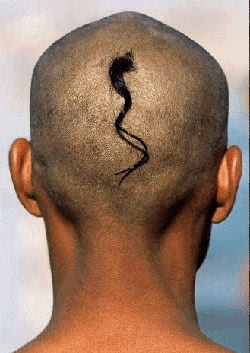
8. Shikha (Sacred Topknot) – Hinduism
Who wears it: Traditionally, Hindu men (especially Brahmin priests, religious scholars, or devout students) who have undergone initiation rites like the sacred thread ceremony.
Meaning: A shikha (also called choti) is a small tuft of hair left at the crown or back of an otherwise shaved head. This ancient practice carries deep symbolic meaning.
The shikha represents spiritual focus, purity, and commitment to God. It serves as a daily reminder that the wearer is tying their mind to holy thoughts and learning. In Hindu philosophy, the crown of the head is associated with higher wisdom and spiritual energy, and the shikha is said to protect and honor this spot.
Shaving the rest of the head is an act of renouncing ego and vanity only the dedicated tuft is kept, symbolizing attachment solely to divine knowledge and duty.
Fun fact: In some traditions, the shikha is tied up in a knot during important rituals to help focus the mind, while leaving it loose can be a sign of mourning or humility.
9. Buddhist Monk’s Shaved Head – Buddhism
Who wears it: Monks and nuns in many Buddhist traditions (and sometimes laypeople during special retreats).
Meaning: A shaved head is one of the most recognizable symbols of Buddhist monastic life. When a person becomes a monk or nun, part of the ordination ceremony is the cutting off of hair.
Shaving the head symbolizes renunciation and humility. By letting go of hair Buddhists show their desire to let go of vanity, ego, and attachment.
The uniform appearance also promotes equality: without fancy hairstyles, everyone in the monastery looks similar, regardless of background or social class. This helps keep the focus on spiritual practice instead of outward appearance.
The outward act of shaving mirrors the inner work of cutting off negative thoughts and attachments.
10. Christian Headscarf or Veil – Christianity
Who wears it: Women in some Christian traditions, such as Catholic and Eastern Orthodox communities, as well as groups like Mennonites, Amish, and other “Plain” churches.
Meaning: In many Christian interpretations of the New Testament, covering the head during worship is seen as a sign of reverence, modesty, and humility before God.
Historically, it was common for Christian women to cover their hair in public or at church. Veils, mantillas, and simple scarves all served as tangible signs of respect in God’s presence. In some communities, head coverings also reflected marital status or virtue.
Today, not all Christian women veil, but those who do often describe feeling a special sacredness and focus during prayer when their heads are covered. Iconic images of Mary, the mother of Jesus, almost always show her with a veil, reinforcing the long association between head coverings, purity, and devotion.
Who wears it: Women and girls in Old Order Amish communities (and similarly by Mennonites and other Plain Anabaptist groups).
Meaning: Amish women wear a prayer covering, or kapp, at all times as a sign of modesty, obedience, and readiness to pray. Their long hair is kept pinned up in a bun under the covering.
This practice is rooted in a literal reading of New Testament passages about women covering their heads when praying. Since the Amish aim to “pray without ceasing,” the covering stays on throughout daily life.
The kapp symbolizes humility before God and a willingness to live under God’s order, as understood in their community. Over the kapp, women often wear a bonnet when going out, which adds protection and carries additional cultural meaning. In some groups, style or color can hint at marital status or age.
Overall, the covering and bonnet reflect the Amish emphasis on simplicity, plain dress, and separation from worldly fashion, so that inner faith and community values take center stage.
12. African Headwrap (Gele, Duku) – Worn Across Many Faiths
Who wears it: Women across many African and Afro-Caribbean cultures, often Christian or Muslim women in West Africa, as well as those practicing Indigenous traditions.
Meaning: Bold, beautiful headwraps like the Nigerian gele or Ghanaian duku carry both cultural pride and spiritual meaning. They are commonly worn to church, weddings, festivals, and important ceremonies.
While not limited to one religion, these wraps often intersect with faith and worship. Covering the head with richly colored cloth can express respect, dignity, and connection to heritage. In some churches, it’s expected that women wear a headwrap or scarf as a sign of unity and reverence during worship.
The headwrap also functions as a kind of crown. The way it is tied can signal confidence, celebration, or even marital status. The skill of tying a dramatic gele is considered an art form, and women often help each other, creating a sense of sisterhood and shared identity.
Who wears it: Men and women in various Indigenous and First Nations communities, often during ceremonies, powwows, or spiritual dances.
Meaning: In many Indigenous traditions, covering the head with a scarf, wrap, or band is a sign of honor, protection, and respect for ancestors. Practices vary widely, but common themes include:
Honoring grandmothers and elders (for example, floral “kokum” scarves in some Cree and Métis communities).
Expressing pride in heritage and cultural survival.
Offering spiritual protection during ceremonies or healing rituals.
In some Afro-Indigenous and Caribbean spiritual traditions, headwraps are also worn during rituals because the head is seen as a sacred entry point for divine inspiration. Wrapping or covering the head during sacred moments says: I stand before the Creator with reverence, carrying my ancestors with me.
14. Nazirite Vow (Uncut Hair) – Ancient Hebrew Tradition
Who wore it: In Biblical times, any man or woman of Israel who took a Nazirite vow of special dedication, as described in the Hebrew Bible (for example, Samson and Samuel).
Meaning: The Nazirite vow was a promise made to God for a set period. Those who took it agreed to abstain from certain things – including cutting their hair.
Uncut hair became the outward sign of their total devotion and separation to God. As the hair grew long, it symbolized strength and commitment that came from God. Samson is the most famous example: his legendary strength was tied to his uncut locks, and when his hair was cut, he lost his power.
Normally, after the vow ended, a Nazirite would shave off the grown hair and offer it as part of a sacrifice, marking the completion of their special period of dedication.
While the Nazirite vow isn’t commonly practiced in Judaism or Christianity today, its imagery continues to inspire. Modern movements like Rastafarianism draw on Samson’s story, seeing long, uncut hair as a sign of covenant, strength, and resistance to worldly pressures.
What They All Have in Common
From the humble kippah to the mighty dreadlocks, all these head coverings and hairstyles share some beautiful common threads:
Reverence and Respect: They’re worn to honor something sacred, God, a Guru, ancestors, or a spiritual ideal. Covering one’s head or keeping one’s hair in a certain way becomes an everyday act of worship.
Identity and Community: These coverings tell a story about who a person is and the community they belong to. A Sikh turban, a Muslim hijab, an African gele, or an Amish kapp all serve as visible badges of belonging and pride.
Humility and Modesty: Many of these practices include an element of modesty. The focus shifts from “How do I look?” to “Who am I trying to be on the inside?”
Devotion and Spiritual Strength: Keeping long hair, tying a scarf daily, or shaving the head requires commitment. That discipline reflects inner strength and dedication. Many believers feel their head coverings give them a sense of protection, courage, or responsibility.
In essence, these diverse hats, scarves, wraps, and hairstyles all say:
“I am a person of faith, and I carry my faith with me wherever I go.”
By wearing these symbols, people around the world turn something as ordinary as hair or cloth into a living testimony of their values. It’s a powerful reminder that some of the deepest statements of belief aren’t spoken… they’re worn, with love and conviction, for all to see.
Wrapping Up
Teaching kids about hair and head coverings is about more than manners it’s about growing hearts that see humanity in everyone.
When kids understand why something matters, they move from “that’s weird” to “that’s wonderful.”
“Respect can start with something as small as what’s on someone’s head and grow into a habit of compassion that lasts a lifetime.”
So the next time your child blurts out, “What’s that on his head?”, take a deep breath and smile. You’ve just been handed a perfect Faithfully Explore! moment.
Hats off to raising kind, curious, and respectful explorers.
Fauja Singh: Marathon Man Mini Coloring Book is a powerful children’s book celebrating perseverance, Sikh traditions, and real-life hero Fauja Singh, the oldest marathon runner. Perfect for teaching kids about resilience, faith, and multicultural heroes.
Videos to Explore:
One response to “Hats Off to Respect: Teaching Kids About Hair and Head Coverings”
Privacy & Cookies: This site uses cookies. By continuing to use this website, you agree to their use. To find out more, including how to control cookies, see here: Cookie Policy.




Let us know what you think.