
What happens when the Sun disappears at the end of the day? Does the Moon simply take its place? And why can we sometimes see the Moon while the Sun is still shining?
In Episode 67 of Faithfully Explore!, “Why the Sun and Moon Take Turns: A Traditional Lithuanian Sky Story,” children travel to Northern Europe to hear a traditional story about Saulė, the Sun, and Mėnulis, the Moon. The story offers an imaginative explanation for one of the most dependable patterns in our world: the arrival of day and night.
After listening, children may be ready to investigate the science behind the story, discover what happens beneath the nighttime sky, build their own solar system, and find Lithuania on a map.
These Sun and Moon books and activities for kids make it easy to continue the adventure. Together, they connect storytelling, astronomy, early reading, art, STEM, and European geography in ways that work well at home, in a homeschool unit, or in an elementary classroom.
This post may contain affiliate links. If you purchase through one of these links, Faithfully Explore! may receive a small commission at no additional cost to you. These purchases help support the creation of educational podcast episodes and resources for families.
Begin with the Science of Day and Night
What Makes Day and Night
By Franklyn M. Branley
Illustrated by Arthur Dorros

What Makes Day and Night is an excellent first book to read after listening to the Lithuanian story. It explains that the Sun does not actually travel around Earth each day. Instead, Earth rotates, carrying different parts of the planet into and out of the Sun’s light.
The book uses clear language, approachable illustrations, and a simple experiment to help children visualize a concept that can otherwise feel surprisingly complicated. Readers can use a lamp to represent the Sun and observe what happens as a model Earth turns.
This is especially valuable for children who understand ideas best when they can see and physically demonstrate them. The book introduces the scientific explanation without taking away from the wonder of the traditional story. Instead, it helps children see that folklore and science can offer different—and equally interesting—ways to explore the sky.
This book is a strong choice for:
- Elementary science lessons about Earth’s rotation
- Homeschool astronomy units
- Families looking for a clear explanation of day and night
- Comparing traditional explanations with scientific models
Try this after reading: Place a sticker on a globe to mark Lithuania. Shine a lamp on the globe and slowly rotate it. Watch Lithuania move from daylight into darkness and back again.
Compare the Sun and Moon
The Sun and the Moon
By Carolyn Cinami DeCristofano
Illustrated by Taia Morley
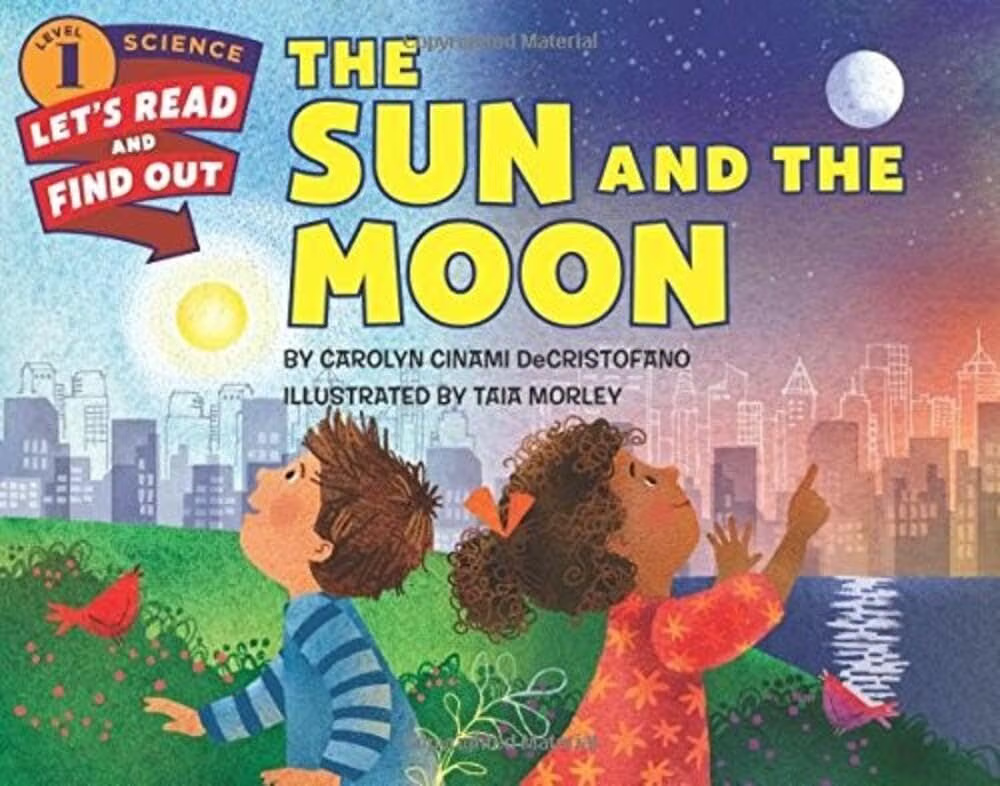
The Sun and the Moon invites children to compare what they notice in the daytime and nighttime skies. The Sun always appears round, while the Moon’s visible shape seems to change. The Sun is a star that produces light, while the Moon reflects sunlight. Children may even be surprised to discover that the Moon does not belong only to the night; it can sometimes be seen during the day.
Part of the Let’s-Read-and-Find-Out Science series, this colorful picture book was created for young children beginning to investigate science. It introduces basic astronomy through engaging text and illustrations without overwhelming readers with too much technical information.
This book is a particularly good match for the episode because children can compare the scientific Sun and Moon with Saulė and Mėnulis from the Lithuanian story.
This book is a strong choice for:
- Children ages 4–8
- Read-aloud science lessons
- Correcting the idea that the Moon only appears at night
Talk about it: How are the real Sun and Moon different from the characters in the story? Why do you think people often imagine them as characters with feelings and personalities?
A Moon Story About Feeling Important
The Night the Moon Went Missing
By Brendan Kearney
What might happen if the Moon felt unimportant and decided to disappear?

In The Night the Moon Went Missing, the Moon notices how happy everyone seems when the Sun appears. Feeling overlooked, Moon leaves the sky—and a young girl sets out to find her.
The story’s emotional heart makes it a lovely bridge between astronomy and social-emotional learning. Children discover that Moon plays an important role even when people do not always stop to notice her. The book also introduces some of the reasons Earth needs the Moon, wrapping real science in a gentle, imaginative adventure.
Rather than simply presenting facts, it invites children to think about appreciation, comparison, belonging, and the different roles people play.
This book is a strong choice for:
- Children who prefer stories to traditional nonfiction
- Bedtime reading
- Social-emotional learning
Talk about it: Have you ever felt as though someone else received more attention than you? What helped you remember that your role was important too?
Build Early Reading Confidence
DK Super Readers Pre-Level: Sun and Moon

Some young explorers are ready to learn about space but still need confidence to read a nonfiction book independently.
DK Super Readers Pre-Level: Sun and Moon combines simple text, strong visual support, and fascinating facts about two familiar objects in the sky. The carefully leveled format helps beginning readers build vocabulary and practice essential nonfiction reading skills while learning why the Sun and Moon matter to life on Earth.
It is an especially practical addition for families and teachers who want one resource to support both literacy and science.
This reader is a strong choice for:
- Beginning readers
- Science-themed literacy centers
- Building astronomy vocabulary
Extend the learning: Ask children to look for and point to the words Sun, Moon, day, night, light, and Earth. Older children can use each word in a sentence.
Discover What Happens After Sunset
Through the Night Sky: A Collection of Amazing Adventures Under the Stars
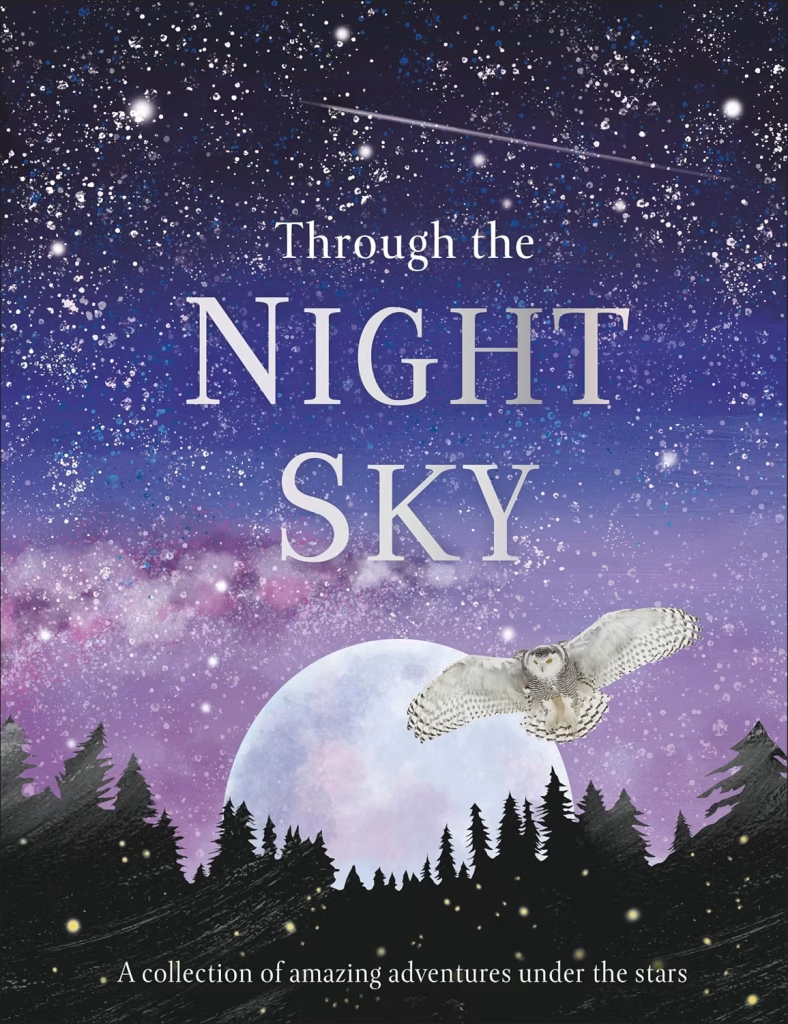
The sky does not become empty when the Sun disappears. In many ways, an entirely new world becomes visible.
Through the Night Sky takes readers on a journey through the remarkable things that happen after dark. Children can explore the Moon, planets, stars, meteor showers, nocturnal animals, and human activities that illuminate the darkness—from fireworks to nighttime celebrations.
This beautifully illustrated book expands the episode beyond one traditional explanation of day and night. It encourages children to see darkness as something filled with activity, movement, discovery, and beauty.
The variety of subjects also makes it a good choice for mixed-age families. Younger children can study the illustrations and choose the scenes that interest them, while older children can read the accompanying information and make connections across astronomy, nature, and culture.
This book is a strong choice for:
- Children who love detailed illustrations
- Family read-alouds with multiple ages
- Night-sky and nocturnal-animal units
Plan a nighttime adventure: Take the book outside with a flashlight, blanket,
Build and Paint a Glowing Solar System
4M Solar System Planetarium
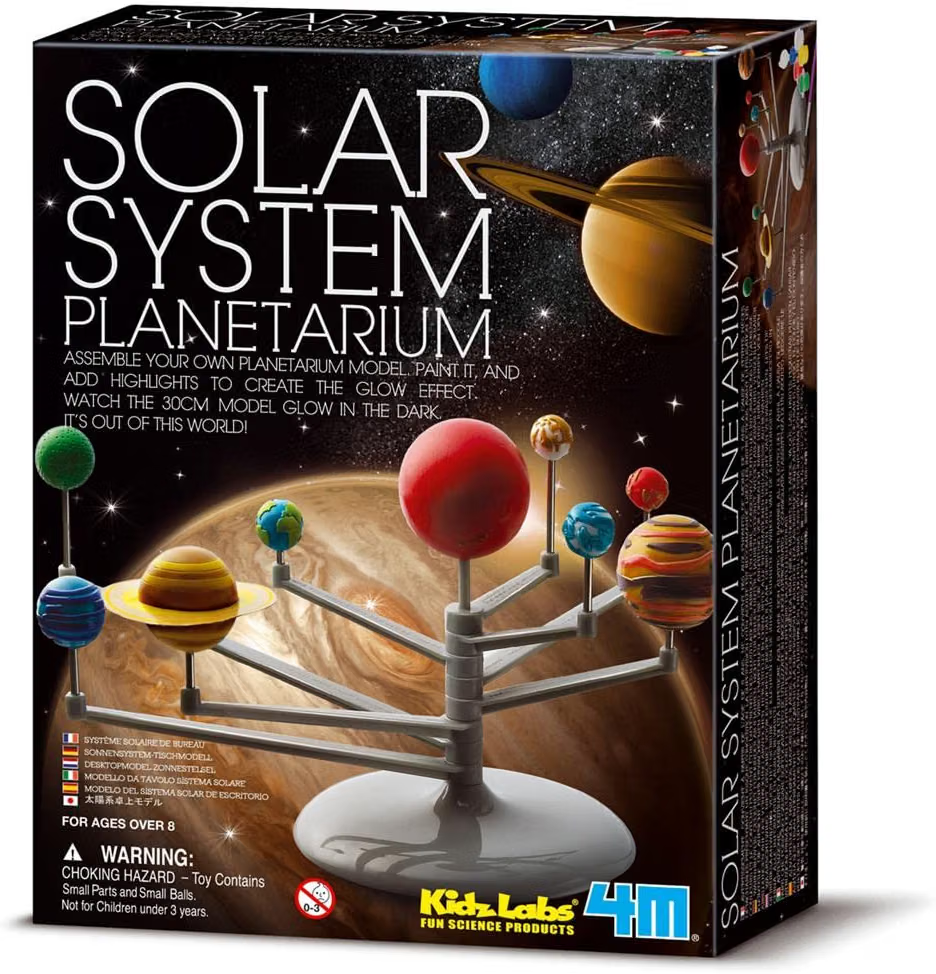
After reading about the Sun, Moon, and night sky, children can create their own space model.
The 4M Solar System Planetarium is a hands-on kit that allows children to assemble and paint the Sun and planets. The plastic planets snap together without glue and attach to a stand with rotating arms. Paint and glow-in-the-dark highlights transform the finished project into a colorful display for a bedroom, learning space, or classroom.
The process of building the model gives children time to notice the order of the planets and consider how the solar system is organized. The rotating arms also provide a beginning demonstration of the idea that planets move around the Sun.
This kit is a strong choice for:
- Children ages 8 and older
- Hands-on and artistic learners
- Family STEM projects
Make it meaningful: Before assembling the model, ask children to find Earth. What makes Earth’s place in the solar system special? Where would the Moon belong, even though it is not one of the eight planets?
Helpful note: Like most tabletop solar-system models, the planets and distances are not shown at their true relative sizes. This is a great opportunity to explain that a real scale model would need to be enormous.
Find Lithuania on the Map
GeoPuzzle Europe Jigsaw Puzzle
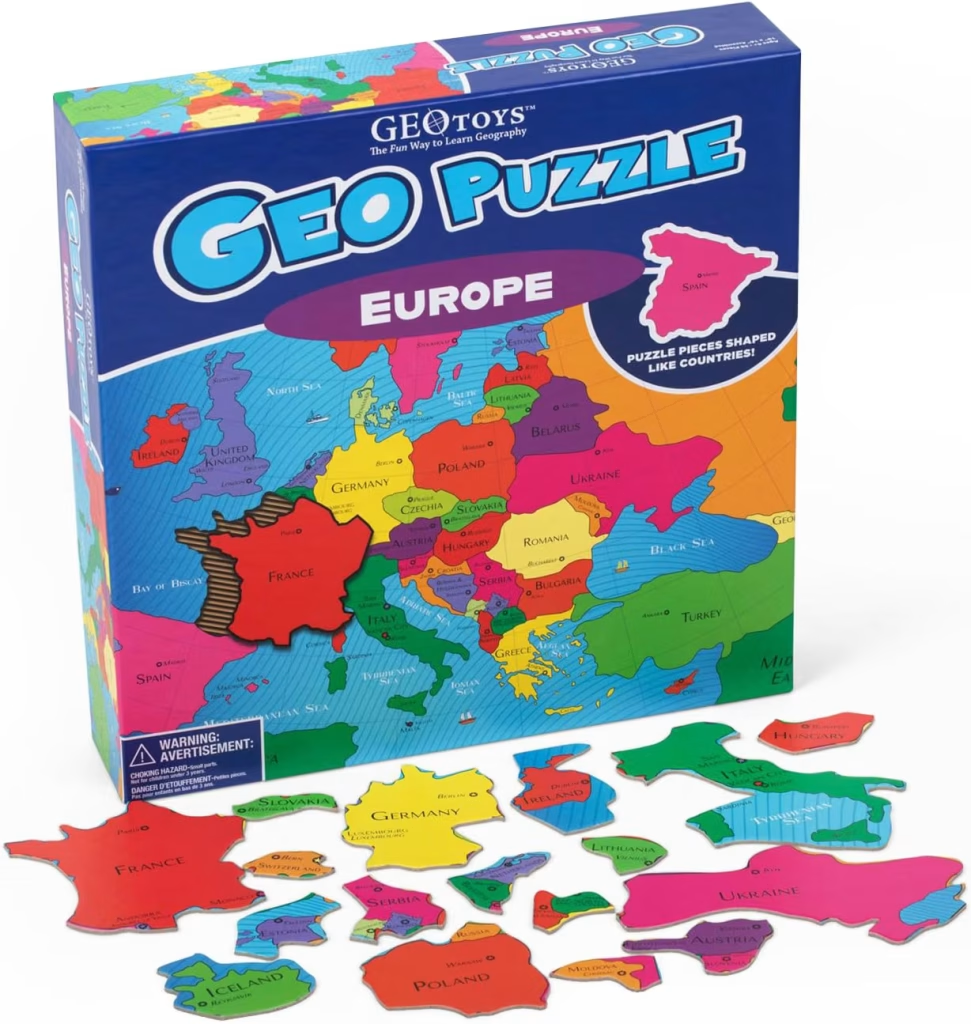
The episode begins with the sky, but it also opens a door to another important question: Where is Lithuania?
The GeoPuzzle Europe turns that question into a hands-on geography challenge. Its 58 pieces are shaped like countries or groups of countries, helping children learn their names, shapes, and locations as they assemble the map.
As children build, help them locate Lithuania along the Baltic Sea. Then find its Baltic neighbors, Latvia and Estonia. Children can also identify the other European countries they recognize, and the bodies of water surrounding the continent.
Unlike a worksheet that may be completed once and forgotten, a geography puzzle can be used repeatedly. Each time children rebuild Europe, they strengthen their visual memory of where countries belong.
This puzzle is a strong choice for:
- Learning where Lithuania is located
- European geography units
Turn it into a listening activity: Start the Faithfully Explore! episode, spread out the pieces, and see whether children can locate Lithuania before the traditional story begins.
Create a Complete Sun, Moon, and Lithuania Learning Day
Use these resources separately, but they become even more meaningful when combined into a simple learning sequence.
1. Listen
Begin with Episode 67 | Why the Sun and Moon Take Turns: A Traditional Lithuanian Sky Story. Invite children to listen for the problem in the story, the decision that is made, and the explanation it provides for day and night.
2. Locate
Use the GeoPuzzle Europe to find Lithuania and the Baltic Sea.
3. Investigate
Read What Makes Day and Night and use a lamp and globe to model Earth’s rotation.
4. Compare
Read The Sun and the Moon. Create two columns and record what children learn about each object.
5. Imagine
Read The Night the Moon Went Missing and discuss why the Moon is important.
6. Explore
Choose a nighttime adventure from Through the Night Sky and make an observation outside.
7. Build
Finish the experience by assembling and painting the 4M Solar System Planetarium.
Stories and Science Belong Together
A traditional sky story and a science book do not have to compete with each other.
Traditional stories show us how people have used imagination, relationships, and familiar experiences to make sense of the world. They preserve language, values, cultural memory, and generations of wonder. Science asks children to observe, test, model, and look for physical explanations.
When children explore both, they learn that one question can lead to many kinds of discovery.
Begin with Saulė and Mėnulis. Follow their story into an experiment about Earth’s rotation. Find Lithuania on a map. Step outside beneath the stars. Then keep looking up—because the sky always has another story to tell.
Listen, read, build, explore—and keep filling your Belief Backpack with discoveries from around the world.