
Why does the Dalai Lama giggle so much—even after facing exile from Tibet? In this playful Faithfully Explore episode, kids discover how laughter, mindfulness, and compassion turn hard moments into joy through stories, games, and heartwarming “Belief Backpack” lessons.
🎧 Listen to the Episode


Episode Overview
Length
🕛 13 mins
Host
🎙️ Laura Menousek
Release Date
March 5 , 2026
Journey Highlights
- A Mountain Mystery Begins
- We travel high into the snowy Himalayas to meet the giggling Dalai Lama and uncover the secret behind his joyful spirit.
- Laugh at Yourself Lesson
- Through playful storytelling (and a little pretend tripping!), kids discover how laughing at mistakes makes problems feel smaller.
- Giggle or Grumble Game
- An interactive call-and-response game helps children practice choosing laughter in everyday situations.
- Mindfulness Made Simple
- We explore how noticing tiny joys—sparkling snow, warm tea, silly pets—builds real happiness in the present moment.
- The Happiness Bubble Activity
- A guided compassion visualization teaches kids how kindness grows joy inside their own hearts.
- The Story of Dorje’s Full Bowl
- A memorable monastery tale shows how letting go of grumpy thoughts makes room for giggles.
- Belief Backpack Takeaways
- Laugh at yourself.
- Notice small joys.
- Practice compassion daily.
For Parents and Educators
In this episode, children explore the joyful spirit of the Dalai Lama through storytelling, movement, mindfulness, and play. While the tone is light and giggle-filled, the themes are deeply meaningful and developmentally powerful.
Social-Emotional Learning (SEL)
This episode supports:
- Emotional regulation – Laughing at mistakes reduces shame and builds resilience.
- Growth mindset – Children learn that errors are part of learning.
- Perspective-taking – The “Giggle or Grumble” game encourages flexible thinking.
- Compassion practice – The Happiness Bubble visualization strengthens empathy.
Mindfulness Skills
Children are gently introduced to mindfulness as “noticing the good stuff happening right now.” The pause-and-look activity helps build:
- Present-moment awareness
- Gratitude habits
- Nervous system regulation
These are foundational skills for focus, stress reduction, and classroom readiness.
Cultural & Religious Literacy
The episode briefly introduces:
- Tibet as the Dalai Lama’s homeland
- The concept of a monastery
- The Buddhist value of compassion
All religious vocabulary is explained in simple, accessible language. The focus remains on universal values, kindness, laughter, and perspective, making it appropriate for diverse classrooms and homes.
Discussion Starters
After listening, consider asking:
- When was a time you laughed at yourself?
- What tiny joy did you notice today?
- How did it feel to send someone kind thoughts?
- What fills your “brain bowl” when you feel grumpy?
Classroom & Home Extensions
- Create a “Tiny Joy” Wall where kids post daily smile moments.
- Practice the Happiness Bubble as a morning meeting routine.
- Role-play “Giggle or Grumble” scenarios to build flexible thinking.
- Introduce a simple gratitude journal.
Big Takeaway
Children learn that joy is not about avoiding hard things.. it’s about how we respond to them. Through laughter, mindfulness, and compassion, kids discover they have tools inside themselves to grow happiness, even during challenges.
Tashi Delek may good fortune follow your family or classroom today.
Dive Deeper
This episode introduces children to the joyful presence of the Dalai Lama, but beneath the giggles lies a profound philosophy rooted in Tibetan Buddhism, neuroscience, and emotional resilience.
Laughter as Spiritual Practice
For the Dalai Lama, laughter is not denial—it is discipline. His humor reflects a cultivated inner stance shaped by Buddhist teachings on impermanence, non-attachment, and compassion. When he laughs at spilled tea or awkward moments, he models ego-lightness: the ability to loosen our grip on self-importance.
In Buddhist psychology, suffering often arises from clinging to how things “should” be. Humor gently disrupts that clinging. It reframes mistakes as temporary and survivable. Research in positive psychology echoes this: self-directed humor is linked to emotional flexibility and lower stress responses.
Exile and Emotional Resilience
In 1959, following political upheaval in Tibet, the Dalai Lama fled into exile and has lived in India ever since. This context makes his joy even more striking. His public stance toward those who displaced him has consistently emphasized compassion over resentment.
This is not passive acceptance. It reflects a core Buddhist principle: anger harms the one who holds it. Compassion is seen as both an ethical commitment and a practical path to inner peace.
For adults navigating grief, change, or conflict, this model invites reflection:
- What happens when we release the need to “win” emotionally?
- What if compassion is strength, not softness?
The Science of Mindfulness & Tiny Joys
The episode’s “tiny joys” practice aligns with contemporary neuroscience. Noticing small positive experiences strengthens neural pathways associated with gratitude and well-being. Dr. Rick Hanson describes this as “taking in the good” deliberately savoring micro-moments so the brain encodes them.
Mindfulness, in its simplest form, is attention with gentleness. It widens awareness beyond rumination. For children, this becomes sparkle-in-the-snow noticing. For adults, it may be steam rising from morning coffee or a quiet breath before responding in frustration.
Compassion as a Happiness Strategy
The Dalai Lama often says, “If you want others to be happy, practice compassion. If you want to be happy, practice compassion.”
Compassion activates affiliative systems in the brain, releasing oxytocin and calming stress responses. It shifts focus outward, reducing self-centered rumination. In classrooms, workplaces, and homes, small compassionate acts reshape relational climates.
Consider:
- How often do we model laughing at ourselves?
- Do children see us noticing small joys?
- Are we practicing compassion toward ourselves… or only others?
The “Full Bowl” Metaphor
The story of Dorje and the overflowing tea bowl echoes a Zen teaching about the “beginner’s mind.” When we are overly certain, resentful, or preoccupied, there is no space for new insight. The full bowl symbolizes cognitive rigidity; emptying it represents openness.
For adults, the invitation is subtle but powerful:
- Where is your bowl too full?
- What thought patterns crowd out joy?
- What would it mean to drain even a little?
Universal Threads
Although rooted in Tibetan Buddhist tradition, the themes in this episode resonate across cultures:
- Christian teachings on forgiveness
- Islamic emphasis on mercy (rahma)
- Jewish joy practices (simcha)
- Indigenous gratitude rituals tied to land and daily life
The throughline is clear: joy is not circumstantial it is cultivated.
A Gentle Reflection
The Dalai Lama’s laughter does not erase hardship. It coexists with it. That coexistence may be the most mature lesson of all.
For adults supporting children (and themselves), the practice becomes threefold:
- Lighten the ego.
- Notice the good.
- Lead with compassion.
In a world that often feels heavy, modeling grounded joy may be one of the most radical forms of leadership we can offer.
Tashi Delek, may your bowl have room for both wisdom and laughter.
Books about or by Dalai Lama
This week, we’re exploring books inspired by the life and teachings of Dalai Lama, a spiritual leader in Tibetan Buddhism who teaches the world about peace, compassion, and caring for others… even when life is hard.
Whether you’re reading with little ones, older kids, or diving deeper as an adult, these books help families explore what it means to live with courage, joy, and a soft heart.
For Younger Explorers (Ages 4–8)
The Seed of Compassion: Lessons from the Life and Teachings of His Holiness the Dalai Lama
by His Holiness the Dalai Lama & illustrated by Bao Luu
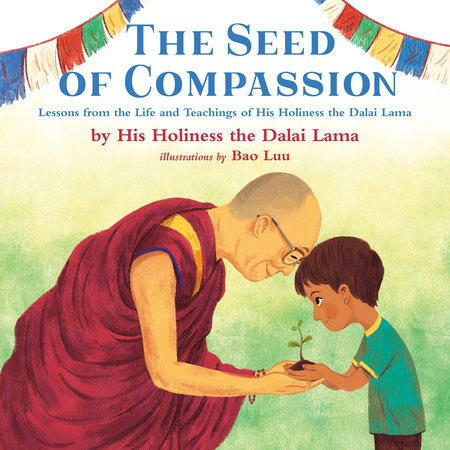
This beautifully illustrated picture book tells the story of the Dalai Lama’s childhood — when he was just a curious little boy named Lhamo Thondup. Through gentle storytelling and warm artwork, children learn how small acts of kindness grow into big waves of change.
The message is simple but powerful:
Compassion isn’t something you wait to feel when you’re older.
It’s something you practice right now.
Perfect for bedtime conversations about:
- What kindness looks like
- How to respond when someone is hurting
- Why helping others makes our own hearts feel bigger
For Curious Middle-Grade Readers (Ages 7–12)
Who Is the Dalai Lama?
by Dana Meachen Rau & illustrated by Dede Putra

Part of the popular Who Was? series, this biography introduces kids to the Dalai Lama’s life in a way that feels accessible and engaging. It explains:
- What Tibet is
- Why he had to leave his home
- What it means to live in exile
- How he became a global voice for peace
This is a great bridge book for kids who love history, leaders, and stories of resilience. It gently introduces complex topics like political conflict and cultural identity in age-appropriate ways.
For Teens & Grown-Ups
If your child asks bigger questions or if you want to deepen your own understanding these books offer thoughtful reflections on joy, resilience, and emotional well-being.
The Art of Happiness: A Handbook for Living
by the Dalai Lama

This book blends Buddhist wisdom with modern psychology. It explores practical questions like:
- What actually makes us happy?
- How do we respond to suffering?
- Can compassion reduce anxiety?
It’s reflective without being heavy — ideal for parents who want to model mindful living.
The Book of Joy: Lasting Happiness in a Changing World
by the Dalai Lama and Desmond Tutu

In this moving conversation between two global spiritual leaders, the Dalai Lama and Desmond Tutu laugh, tease each other, and talk honestly about hardship, forgiveness, and choosing joy anyway.
For adults especially, this book reminds us that joy isn’t the absence of struggle… it’s the decision to meet struggle with compassion.
It’s a beautiful companion read for families exploring faith, justice, and emotional resilience.
Why These Books Matter for Families
In Faithfully Explore!, we often talk about packing our “Belief Backpack” with ideas we want to carry into the world.
The Dalai Lama’s core teaching is simple:
Be kind whenever possible. It is always possible.
These books help children understand that:
- Kindness is strength
- Compassion is courageous
- Joy can be practiced
- Peace begins inside one small heart
Latest Episodes


Join the Faithfully Explore! Family
Get new episodes delivered right to your inbox:
Share your child’s Belief Backpack art or favorite lesson on Instagram and tag Faithfully Explore!
Help me create more engaging content:
Let us know what you think.